
Gulkana Glacier-pH Research

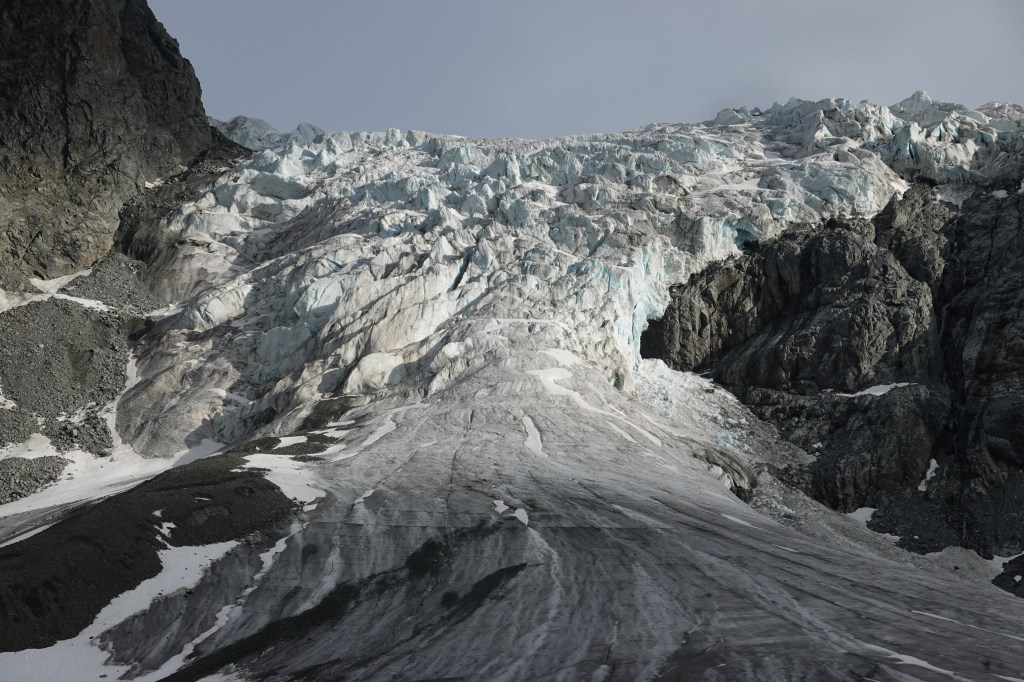
Spending ten days in the vast, icy expanse of Alaska’s Gulkana Glacier was unlike anything I’ve ever experienced. During this research expedition, I had the incredible opportunity to study something that might seem simple on the surface—pH levels. Our hypothesis investigated whether elevation influenced shifts in pH levels or not. Reassuringly, our travel route gave direct access to our question as we hiked from trailhead→base camp→ high camp; with a total of more than 5,000 feet incline, the data collected provided enough information to draw a conclusion. 

Collecting the data wasn’t easy. Since pH can change quickly after sample collection, we had to test it right away, often while standing in snow with numb fingers and wind cutting across the ice. But despite the discomfort, the urgency of our work felt real and important. It reminded me that science doesn’t always happen in labs—it often starts in the wild, with cold hands and a curious mind.

We wrapped up the last day with research presentations at the University of Fairbanks. The crowd consisted of many glaciologists, donors, scientists, and just so many supporting people. One of the most thought-provoking questions we received during our post-expedition presentation was: “Why do you think pH is important?”

At first glance, pH might just seem like a basic chemistry concept. But out there, standing in freezing temperatures, surrounded by nothing but ice, snow, and silence, it became clear how essential it is. pH helps us detect subtle changes in the environment—changes that can reveal human impact, even in places where it feels like people have never stepped foot.

Glaciers are often thought of as pristine. But our pH results, which mostly fell in the 6–7 range (slightly acidic to neutral), hinted that these ecosystems are not as isolated as they appear. Pollution can travel through the air and settle into glacier ice, altering its chemistry over time. These small shifts in pH can affect everything from microbial life in the meltwater to the long-term health of downstream ecosystems.

This experience taught me that research is not only about the data you collect, but the questions it raises. How much have we already changed remote ecosystems without realizing it? And what responsibility do we have to protect places like the Gulkana Glacier?
Here’s the link to the presentation: Glacial pH Presentation

Love,

Jessica Ngok 🌍
Science or Speculation? The Earth Has a Heartbeat?

Dear Earth, 

Recently, scientists have started using the term “Earth’s heartbeat” to describe the natural cycles and patterns our planet goes through—like ocean currents, seasons, and polar ice cycles. These rhythms usually keep the planet stable, almost like how a steady heartbeat keeps a person alive and well. But now, these rhythms are changing—and climate change is a major reason why.

The Arctic, in particular, is warming nearly four times faster than the rest of the world. This extreme shift in temperature is melting ice caps and glaciers at a rapid rate. That ice used to reflect sunlight back into space, helping to keep the planet cool. But as more ice melts, more heat gets absorbed by the dark ocean water, which causes even more warming—a dangerous feedback loop.

These kinds of dramatic changes are disrupting Earth’s “heartbeat.” Patterns that once repeated reliably—like seasonal sea ice or predictable weather systems—are now becoming irregular or disappearing altogether. Some scientists believe this shift in natural cycles could be a sign that we’re reaching a tipping point, where the damage becomes much harder to reverse.

So when we talk about the Earth’s heartbeat, it’s more than just a metaphor. It’s a way of understanding how deeply climate change is affecting our planet. What’s happening in the Arctic doesn’t stay in the Arctic—it affects global weather, sea levels, and even ecosystems thousands of miles away. It’s a serious reminder that we’re all connected to the planet’s rhythms, and right now, those rhythms are being thrown dangerously off balance.

So when we talk about the Earth’s heartbeat, it’s more than just a metaphor. It’s a way of understanding how deeply climate change is affecting our planet. What’s happening in the Arctic doesn’t stay in the Arctice–it affects global weather, sea levels, and even ecosystems thousands of miles away. It’s a serious reminder that we’re all connected to the planet’s rhythms, and right now, those rhythms are being thrown dangerously off balance. 

Love,

Jessica Ngok

Trump’s Lumber Slaughter

Dear Earth,

I would like to start off by saying that I just absolutely bombed my first SAT. But honestly, as much as I want to crawl into bed and rot for the next 24 hours, I’m way too fueled with rage to sit quietly right now.

Let me cut to the chase: Trump. Forests. Tariffs. Disaster.

If you care about the Earth — and I mean truly care about it, not in a “save the turtles” trendy way but in a genuine “I care about the planet and our future generations” way — then buckle up because this is about to infuriate you.

Trump’s “brilliant” plan (and I use that word very loosely) involves slapping a hefty tariff on Canadian lumber imports. Now, you may be thinking, okay… and? Well, the result of this is that American businesses, desperate for wood, will turn to our own forests. The same forests that shelter wildlife, regulate carbon dioxide, and literally keep our planet alive. Trump’s logic? Why pay for lumber from our friendly northern neighbor when we can just destroy our own forests? Genius, right?

Hundreds of acres. Gone.
Forests that took centuries to grow. Gone.
Habitats for countless species. Gone.

And for what? To inflate America’s economy through deforestation? So Trump can act like he’s “saving America” while simultaneously driving us into a climate catastrophe? I don’t think so.

It’s already bad enough that we’re losing forests at alarming rates due to climate change, fires, and illegal logging — but now, Trump wants to legalize this destruction through his administration’s forest-clearing policies. You can’t tell me that doesn’t boil your blood.

And the thing is — it’s not even about us anymore. It’s about the animals, the soil, the water, and the literal air we breathe. Every tree cut down for profit means another hit to our planet’s lungs. But of course, none of this crosses Trump’s mind. Because why care about the environment when you can slap tariffs on Canada and call it a day?

I am TIRED. Tired of pretending that things like this aren’t happening. Tired of watching world leaders prioritize power and money over the only home we have. Tired of watching forests get slaughtered like they’re meaningless when, in reality, they are our survival.

So yeah. I may have bombed my SAT this morning, but at least I still have my common sense intact. Can’t say the same for the man who is determined to leave our planet in shambles.

If you care about the Earth — and I mean really care — then don’t sit quietly about this. Speak up. Vote. Educate yourself. Because the forests may not have a voice, but we do.

And right now? Our forests are screaming.

Peace. Love. Earth,

Jessica Ngok 🌎

L.A. Fires: Plants are a Ticking Bomb

Dear Earth,

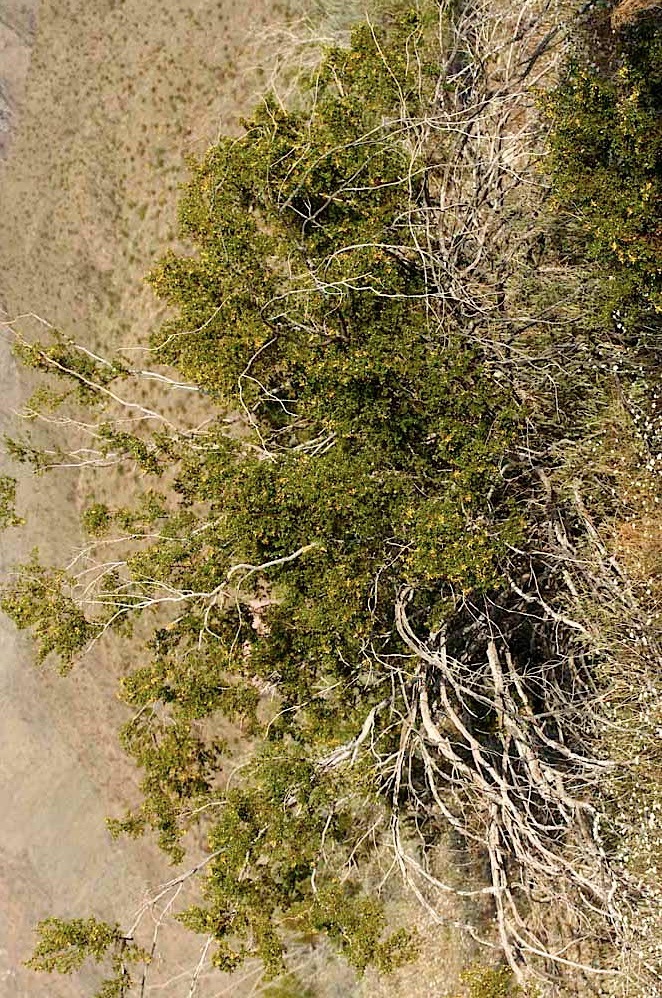
The wildfires in Los Angeles have become a pressing concern, drawing attention to the complex interplay between climate change and natural vegetation. While climate change undeniably exacerbates the conditions that lead to these devastating fires—such as prolonged droughts, higher temperatures, and erratic weather patterns—the primary culprits behind the flames are the chaparral plants that dominate the region. These hardy, drought-resistant shrubs are well-adapted to the Mediterranean climate of Southern California, but they also possess a high oil content, making them particularly flammable. When conditions are dry and hot, these plants can ignite easily, leading to rapid fire spread. 

Photo is adapted from: https://emsherbals.com/blogs/news/premium-harvest-chaparral

In addition to the inherent flammability of chaparral, the changing climate has created an environment where these fires can thrive. The increasing frequency and intensity of heatwaves, coupled with reduced rainfall, have created a perfect storm for wildfires. As the climate continues to warm, the window for fire season expands, allowing for more extended periods of vulnerability. This means that even areas that may have previously been safe from wildfires are now at risk, as the chaparral plants become more susceptible to ignition during these extreme weather events. 

Moreover, the impact of human activity cannot be overlooked in this equation. Urban development encroaches on natural landscapes, increasing the likelihood of human-caused ignitions. As more people move into fire-prone areas, the potential for accidental fires rises, further complicating the already challenging situation. The combination of climate change, the natural characteristics of chaparral, and human influence creates a multifaceted problem that requires comprehensive strategies for fire management and prevention. Addressing these issues is crucial for protecting both the environment and the communities that lie in the path of these relentless fires.

Peace. Love. Earth.,

Jessica Ngok 🌎

What to Expect (And Not Expect) in Trump’s 2024 America

Dear Earth,

With Donald Trump back in the White House, we’re already seeing some major shifts in climate policy. In classic Trump fashion, it’s shaping up to be a big “Thank you, next” to recent environmental efforts. Instead of pushing for renewable energy, get ready for a renewed love affair with fossil fuels. There may be an oil rig pop-up in every backyard if things go the way the fossil fuel industry hopes. Environmentalists are shaking their heads and saying, “Didn’t we just go through this?” 

The U.S. pulling back from international climate agreements could feel like that one friend who bails on plans last minute. As one of the world’s largest carbon emitters, the U.S. plays a crucial role in global emissions reduction. So if America decides to step back, other countries might throw their hands up too, thinking, “If they’re not in, why should we be?” Agreements like the Paris Accord, which aims to limit global warming to 1.5 degrees Celsius, could start feeling more like wishful thinking than a real plan.

Here at home, it might be up to state and local governments to take up the environmental slack. States like California and New York, who’ve been paving the way in green energy, could become the “cool parents” of climate action, handing out solar panels and reusable bags while the federal government doubles down on coal. Localized climate goals could keep some progress alive, but it might also lead to a confusing patchwork of rules where, depending on the state, you’re either a climate warrior or an “anything-goes” energy user.

Economically, it’s a mixed bag. Rolling back federal incentives for clean energy could slow down job growth in wind, solar, and other renewable industries, impacting communities that rely on these sectors. But here’s the twist: companies and the general public are more eco-conscious than ever. Even if federal policy pulls back, popular support and business interest in sustainability could create a quirky, resilient counterculture of climate action, driven by green-minded folks determined to keep us moving forward, one compost bin at a time.

Sincerely,

Jessica N.

Building Careers in the Shadow of Climate Change

Dear Earth,

There’s a question we’ve all been asked a hundred times—“What do you want to be when you grow up?” For some, it might spark excitement, a chance to imagine a life as a doctor, scientist, or engineer. But for many of us, the answer is more complicated. When I think about the future, my mind doesn’t just drift to the career path or the dream job I’d like to pursue. Instead, a deeper fear rises up: Will there even be a future for me to build a career in?

Climate change isn’t a distant problem and it wasn’t to begin with. It’s here, and it’s reshaping everything. Natural disasters once considered rare and extreme are becoming the norm. Take, for instance, hurricanes like Milton and Helene that struck with a ferocity unimaginable only a decade ago. They wiped out communities, displaced families, and caused billions in damage. Thousands of people had to rebuild their lives from scratch, and for many, it wasn’t just homes that were lost—it was jobs, businesses, entire industries that had to start over or disappear altogether. Imagine working toward a career, only to see the very foundation of that career wiped out by a storm.

Image is adapted from: AP News Hurricane Milton

And it’s not just hurricanes. We’re seeing floods in places where they never happened before. Just think about the Sahara Desert—once a symbol of dryness, sand, and relentless heat, now experiencing unprecedented flooding. The irony of one of the driest places on Earth being submerged is like a warning bell ringing for us all. It tells us that climate change is a global force, ignoring boundaries, affecting places we thought were immune.

Photo is adapted from: CNN News Sahara Desert

This kind of instability creates uncertainty for everyone, especially for young people who are preparing to build their lives, careers, and futures. We’re constantly told to dream big and to reach for careers that will allow us to make an impact, to build something meaningful. But it’s hard to make plans when the world we’ll inherit feels so fragile.

In the past, ambition was encouraged with the promise that the future was ours to shape. But now, the future doesn’t feel as guaranteed. We’re told that to make a difference, we need to become engineers, scientists, environmental activists—but even these roles face unique pressures in a world that may need to spend more time managing disasters than innovating. Even if we choose careers aimed at solving these problems, we still have to wonder if we’ll be equipped for what lies ahead.

Facing the fear of an uncertain future isn’t easy, and sometimes it feels like an overwhelming weight. But perhaps in that fear, we’ll find the motivation to build a career with purpose, not just for ourselves but for the generations that follow. Maybe the question isn’t so much “What do you want to be when you grow up?” but rather, “How can you shape the future we all deserve?”

Sincerely,

Jessica Ngok