A Field Trip to Santa Cruz

Exploring Chlorophyll and Nutrient Concentrations

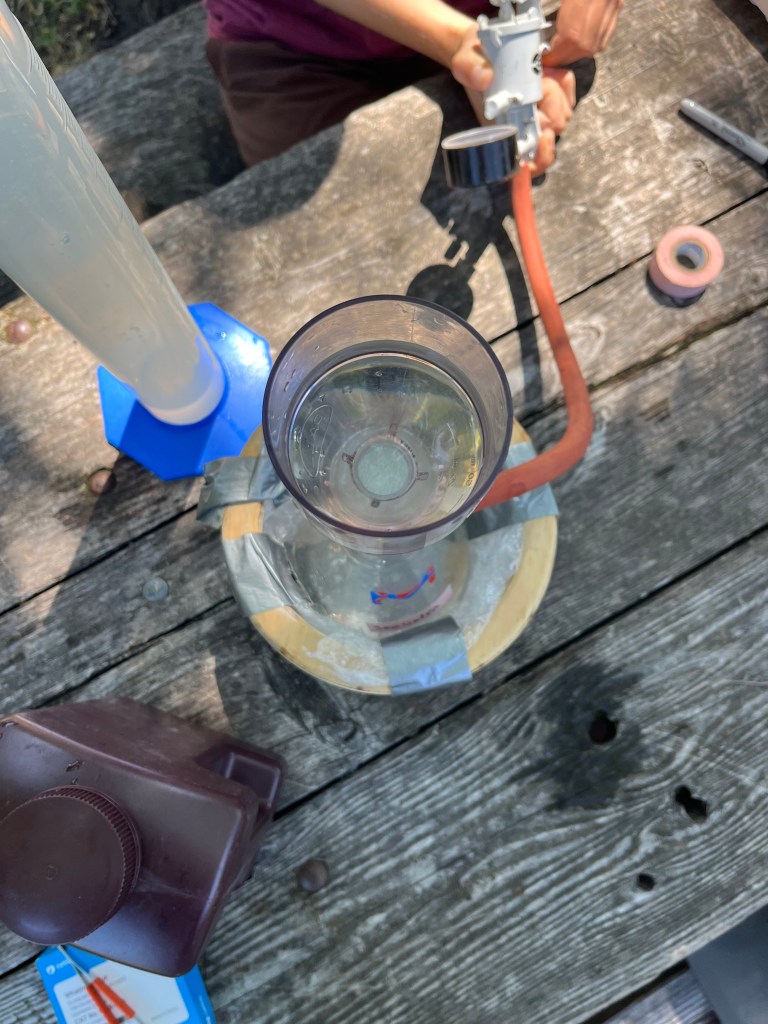
During my Stanford internship, I had the incredible opportunity to participate in a field trip to Santa Cruz, thanks to the guidance of my supervisor. This hands-on experience was designed to investigate the concentrations of chlorophyll, particulate organic carbon (POC), and particulate organic nitrogen (PON) across different sites. Each location we visited provided unique insights into how these factors vary between different aquatic environments.

San Lorenzo River: A Freshwater Journey

Our first stop was the San Lorenzo River. This vital freshwater source offered a fascinating starting point for our investigation. We examined the relationship between the river’s flow, its surrounding vegetation, and the concentrations of chlorophyll, POC, and PON. The dynamic environment of the river provided a wealth of data on how these elements interact in a freshwater setting.

Schwan Lake: A Contrast in Still Waters

Next, we traveled to Schwan Lake, a serene freshwater lake that contrasts sharply with the flowing waters of the San Lorenzo River. The stillness of the lake offered a different perspective on chlorophyll and nutrient concentrations. Observing how these elements are influenced by a static environment was a valuable part of our study.

Santa Cruz Pier: Insights from the Coast

Our exploration then took us to the Santa Cruz Pier. The marine setting of the pier presented a new set of variables. We investigated how chlorophyll and nutrient levels differ in coastal environments compared to freshwater sites. The marine ecosystem, with its unique characteristics, provided crucial insights into how these elements interact in saltwater environments.

Santa Cruz Wharf: The Human Impact

Our final destination was the Santa Cruz Wharf. This site allowed us to explore the impact of human activity on marine ecosystems. We observed how factors such as marine traffic and other anthropogenic influences affect chlorophyll and nutrient concentrations. Understanding these interactions was essential for grasping the broader implications of human activity on marine health.

Reflections on the Field Trip

This field trip was more than just a series of site visits; it was an immersive experience that deepened our understanding of aquatic ecosystems. By collecting data from diverse environments, we gained valuable insights into how chlorophyll and nutrient levels vary across different settings. The knowledge and experiences gained during this trip have been instrumental in shaping my approach to environmental science and research.

My Summer Research Experience in a Lab

Dear Earth,

As I mentioned previously in my “About Me,” this summer, I had an incredible experience at Stanford, working in the Arrigo Lab, which focuses on the role of phytoplankton in the marine ecosystem. It’s all about connecting these tiny organisms to big ideas like biogeochemical processes and how they impact the climate. The lab uses a mix of methods, including lab experiments, field research, computer models, and even data from satellites! But the coolest part? The field research is absolutely insane. The researchers get to go on cruise ships to the Arctic Ocean to collect samples. They’re out there for weeks, sometimes even months!

To start, my job involved processing the samples collected from the water. First, I would acidify the samples to remove any inorganic carbon, leaving behind only the organic components. Following the acidification process, the samples were placed in a heater to break down the inorganic carbon further, ensuring that only the organic elements remained for analysis.

After heating the samples, I carefully removed them and packed them into tiny tin capsules. This was by far the most time-consuming part of the process—each sample took around 3-5 minutes to package correctly. By the end of the program, I had packaged an incredible 900-1000 samples! It was a laborious task, but there was something strangely satisfying about the routine and precision it required.

But working with the samples wasn’t my only experience in the lab. I had the chance to sit in on several lab meetings, which was a fascinating glimpse into the collaborative nature of scientific research. I watched as professors, post-docs, and students presented and reviewed research proposals, debated findings, and discussed the future direction of their projects. These meetings were a mix of intense discussion and supportive mentorship, showing me just how much science thrives on teamwork and critical thinking.

One of the most interesting aspects of my research was exploring the factors influencing phytoplankton blooms in the Arctic. I discovered that these blooms are influenced by a combination of environmental factors, including light availability, nutrient levels, and water temperature. For example, as sea ice melts due to rising global temperatures, more light penetrates the water, which can stimulate phytoplankton growth. However, this increase in light must be balanced with the availability of nutrients, which are essential for sustaining large blooms. Additionally, water temperature plays a crucial role—phytoplankton thrive in cooler waters, but as the Arctic continues to warm, the dynamics of these blooms are shifting. These discoveries underscored the complex interplay of factors that regulate phytoplankton populations and highlighted the importance of understanding these processes, especially in the context of a changing climate.

These experiences have given me a deeper appreciation for the role of phytoplankton in the Arctic ecosystem and the broader implications for our planet. It’s amazing how something as small as a phytoplankton cell can have such a big impact on the Earth’s climate. I feel incredibly lucky to have been a part of this research, and I can’t wait to see where this journey takes me next!

Best,
Jessica Ngok